Odoo ERP: A Scalable, Functional, and Affordable Business Solution
Reducing Operational Expenses and Minimizing API Challenges
Comprehensive Functionality
Odoo offers a wide range of functional modules that cover core business needs, including sales, inventory, accounting, human resources, project management, and more. These modules are seamlessly integrated, providing a unified platform that enhances visibility and coordination across departments. This functional depth allows organizations to address unique industry requirements without relying on multiple disparate systems.
Introduction
Odoo ERP is a comprehensive enterprise resource planning platform designed to help businesses of all sizes manage their operations efficiently. Known for its scalability, functionality, and cost-effectiveness, Odoo ERP enables organizations to streamline processes, reduce operational expenses, and address common integration challenges such as API issues.
Mitigating API Gremlins
Integration with external systems is often a pain point for businesses, with API issues (“API gremlins”) leading to data inconsistencies and workflow disruptions. Odoo addresses these challenges with robust, well-documented APIs and a modular architecture that simplifies integration. Regular updates and a strong developer community ensure that common API problems are quickly identified and resolved, minimizing their impact on business operations. 
Reducing Operational Expenses
By automating routine tasks, centralizing data, and improving process efficiency, Odoo helps businesses cut operational costs. The platform’s built-in analytics and reporting tools provide actionable insights, enabling better decision-making and resource allocation. This focus on efficiency translates into tangible savings across the organization.
Affordability and Cost Savings
Compared to traditional ERP solutions, Odoo is recognized for its affordability. Its open-source foundation reduces licensing costs, and its modular design means businesses only pay for what they use. The platform’s intuitive user interface also minimizes training time, further reducing implementation and operational expenses.
Scalability for Growing Businesses
One of Odoo ERP’s standout features is its scalability. Whether you are a small startup or a large enterprise, Odoo adapts to your needs with a suite of integrated business applications. As your company grows, you can easily add new modules or users without disruptive system changes, ensuring that your ERP solution evolves alongside your business.
Conclusion
Odoo ERP stands out as a scalable, functional, and affordable platform that empowers businesses to optimize their operations, reduce costs, and confidently manage integrations. With its flexible architecture and commitment to continuous improvement, Odoo is an excellent choice for organizations seeking a future-proof ERP solution.



Over 90+ Odoo ERP Applications Included
Hosted or On Your Servers, 24/7 Support, Free Upgrades, Scalable and AFFORDABLE!
Get Odoo Pricing - Custom Contact MMY

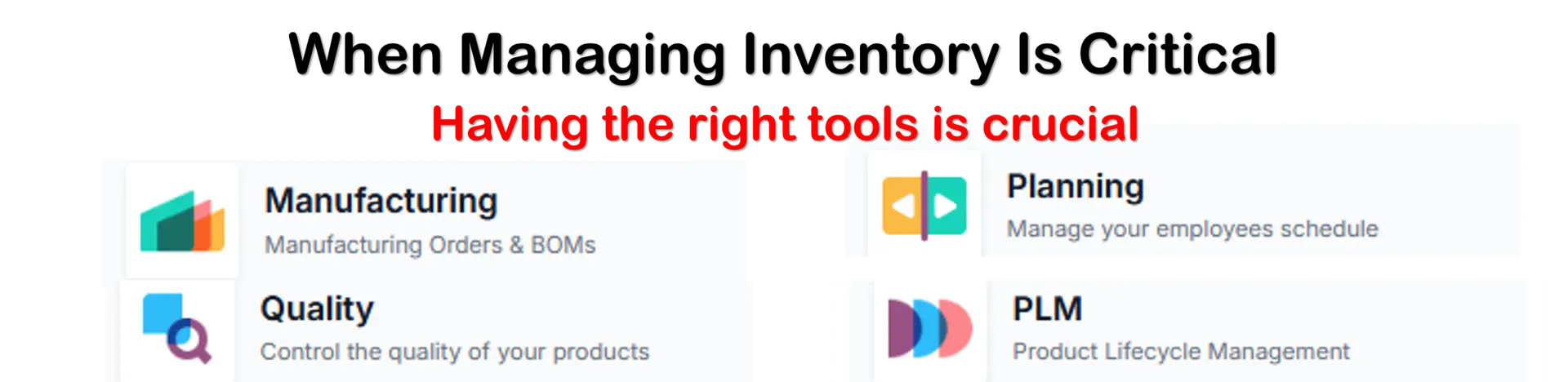

Keep inventory to a minimum, enhance turnover rates, and lower expenses from unsold stock
Integrating MRP (Material Requirements Planning) with product substitutions and runout logic is one of the most effective ways an automotive or manufacturing business can refine inventory workflows and aggressively slash operating expenses.
By layering specialized tools—such as MMY Automotive Business Solutions' OpsSync and PartSync—onto a unified platform like Odoo ERP, companies can handle automated part supersessions effortlessly.
How MRP Substitutions & Runouts Reduce Expenses
In automotive manufacturing and aftermarket distribution, parts change constantly due to engineering updates, supplier shifts, or newer model compatibility. Handling this manually causes massive operational leaks. An automated MRP approach prevents these bottlenecks:
1. Preventing Dead Stock via Automating "Runout" Logic
- The Problem: When an older part (Component A) is being replaced by a newer version (Component B), companies often prematurely buy Component B, leaving thousands of dollars of Component A to rot on warehouse shelves.
- The Solution: The system is programmed with a Runout Date or Runout Condition. The MRP engine will continue to consume existing stock of Component A until it hits zero. Only then will it automatically trigger purchase orders or manufacturing work orders for Component B.
- Expense Reduction: Directly lowers inventory carrying costs and eliminates dead stock write-offs.
2. Avoiding Line Stoppages with Dynamic Substitutions
- The Problem: A critical component is out of stock, halting the production line or delaying a customer order.
- The Solution: MRP substitution rules allow the system to look for pre-approved alternative parts within the multi-level Bill of Materials (BOM). If Part X is unavailable, the system automatically checks if Part Y (a qualified substitute) is sitting in inventory and allocates it instead.
- Expense Reduction: Eliminates expensive emergency shipping fees for rushed supplier parts, maximizes manufacturing throughput, and minimizes shop floor downtime.
3. Precision Procurement and Master Production Scheduling (MPS)
- The Problem: Over-ordering parts because a buyer didn’t realize an alternative, compatible component was already sitting in a secondary warehouse location.
- The Solution: Using an integrated Master Production Schedule (MPS) alongside inventory records ensures that every net requirement calculation factors in on-hand inventory, lead times, and valid part supersessions across all facilities.
- Expense Reduction: Drastically reduces working capital tied up in excess inventory and frees up physical warehouse space
 Accept credit, debit and eCheck payments inside Odoo ERP.
Run transactions, allow customers to pay by email, automate payment collections, and process credit cards—right within Odoo. Easy installation and no development needed.


What Makes Odoo Different
A smooth and friendly user's experience that has been built to ensure the user seamless adoption.
Fluidity and full integration cover the needs of even the most complex companies. The flexibility of Odoo is such that apps can be added according to the growth of your company, adding one app at a time as your needs evolve and your customer base grows.
Thanks to the open source community, Odoo is actively maintained by a large base of developers to meet evolving customer needs and provide new, innovative applications.
Over 90 Applications Included